Sat 24 March 2012 - 22:30
Sun 25 March 2012 - 13:30
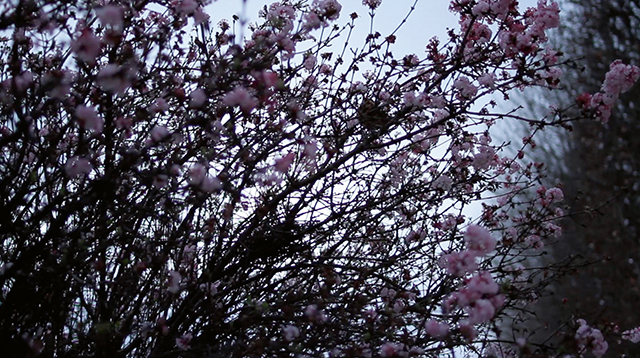
“A to and fro between politics and cinema, between Trotskym and Surrealism, between armed struggle and screenplays, between Palestine, Lebanon and Japan, between the day-before-yesterday and today, between beauty and resolve, between the art of eating and that of being a father, such is the risky and precise life of Masao Adachi, the monsieur with the white hair glimpsed in his delusions. And this is just how Philippe Grandrieux, faithful to his way of doing things, decided to suggest his portrait, with no a priori, without interrupting speech, filming him and listening to his words without at first understanding them, framing him in a tight close-up that is sometimes underexposed, other times overexposed, to better abandon him later for: cherry trees in blossom, the streets of Tokyo swarming with cars and passersby, familiar objects and lactescent celling light. And from time to time, Grandrieux lets speak a few shots from his earlier films, from where suddenly crops up the phrase, Genet-like, given in the title: a paradoxical program that hesitates to connect one shore to the other”. (Jean-Pierre Rehm)
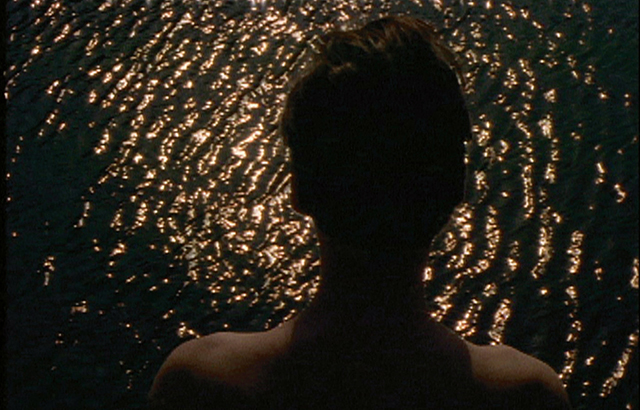
“There is something profoundly new about Grandrieux’s plastic exploration of violence, but also something very contemporary. His approach is not based on such editing and framing effects one finds and admires in Hitchcock and Ray, nor in an exploration of excess as in Tarantino. He works on the inside of an image, on the special relation between the luminous content and the vibrant and fragmentary figuration. Grandrieux may ‘tell’ the story of a serial killer in Sombre, but the violence is both removed from the story and heightened: it descends with its hero into the dark, in scenes of a carved-up female body, captured with a hand-held 35mm camera. As Raymond Bellour observes in his eulogy and lively defence of the film, ‘Pour Sombre’: ‘[the camera places us] among the bodies, into situations of unmitigated suffering, in order to confront us, despite the brutality of the acts, with ambiguous content, in a constantly disrupted fusion’.” (Christa Blümlinger)
“In plaats van de zware 35 mm camera die Grandrieux op zijn shouder hanteerde voor Sombre filmde hij Un Lac met een kleine DV camera, wat een doorgedreven improvisatievrijheid mogelijk maakte en zich laat gevoelen in de volledige beheersing van de film. (..) De capaciteit van de camera om op de meest direct voelbare manier beelden te maken van lichamen en objecten komt hier samen met het grootste verlangen naar abstractie: in de manier waarop elk onderdeel van de film werd bewerkt maar ook in de montage en de constructie van het klankbeeld. Of nog: in de consistente keuze om, van de opname tot de digitale kalibratie en het maken van 35mm prints, het waarneembare lichtniveau laag te houden. Dit alles suggereert dat we ons bevinden voor een nieuwsoortige manier om in te grijpen op de verhoudingen tussen wat Serge Daney ooit aanduidde als ‘de twee grote tendenzen in cinema: vormgeving en registratie... twee manieren om de confrontatie aan te gaan met het onmenselijke in het menselijke’. Daney preciseerde: ‘het is daar tussenin, op het vlak van de scène, dat het onmenselijke op een afstand kan worden gehouden’.” (Raymond Bellour)