Dit programma is een compilatie van vijf poëtische en sociale documentaires die Bruce Baillie opnam voor Canyon Cinema-projectieavonden, onder de titel The News. Deze films vormden een format voor het maken van urgente, politiek gemotiveerde low-budgetwerken. Ze toonden ook de mogelijkheden van een meer directe en snellere overgang van productie naar presentatie.
Introductie door Garbiñe Ortega.
Dit programma wordt herhaald op 8 oktober om 18u00.
A very brief lyrical portrait of the eponymous Japanese gardener at work.
“A living saint projected onto the silver screen. Why did I make this film? I wanted to help my friend find a job in Berkeley. It was one of my first attempts to create film as both utilitarian and Art. Cinema must be meaningful and wonderful in a single stroke of camera and mind. Mr. Hayashi was my own, simple example, derived from an experience in a Zagreb city well, where water and daily gossip flowed freely.” – B.B.
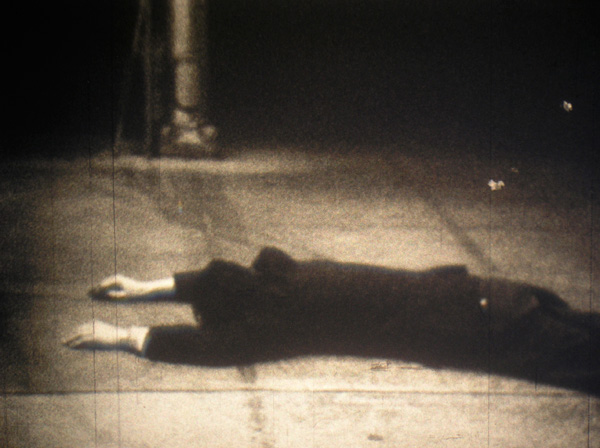
A film mass, for the Dakota Sioux. The Ordinary Mass is traditionally a celebration of Life; thus perhaps there is a contradiction between the form of the Mass and the theme of death in any Requiem Mass (Mozart, etc.). The dedication is to the (religious) nation destroyed by a civilization that evolved from the Mass. Created during the winter of 1963-64, between Berkeley and Mendocino, after a trip into North and South Dakota, down through the junction of New Mexico, Colorado, Utah, and Arizona, and back to the West Coast. The heroic aspect of this work is part of a personal chain of discovery for the author, including To Parsifal, Quixote, and Quick Billy.

“A film for the East Bay Activity Center in Oakland, a school for mentally disturbed children.” – B.B.
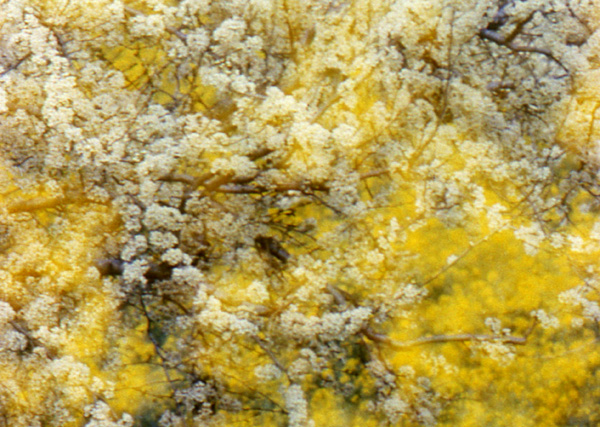
In drie delen met drie verschillende formele strategieën toont Baillie ons ontmoetingen met natuurlijke schoonheid die hij aantreft in de North Bay in de buurt van San Franscisco. het eerste deel betreft een studie van pruimbloesems, weergegeven in rijke en veelvuldige dubbeldrukken die de witte bloemen weergeven als een uitbarsting in een storm van visuele complexiteit gekadreerd in een over paarse bergen bewegend shot. In het tweede deel laat baillie ons kijken naar het kleine meisje uit de titel dat samen met haar hond aan de kant van de weg naar auto’s wuift, verloren in haar wereld en gedachten. De cadrages van Baillie blijven eenvoudig, zonder de nood om elementen toe te voegen of weg te halen. Het derde deel toont waterinsecten aan het oppervlak van een vijver en herinnert ons aan het zeer opmerkelijke en gevoelige camerawerk van Baillie terwijl hij de elegante dansen, het subtiele licht en het effect van de bewegingen op het wateroppervlak observeert. (Mark Toscano)