Ani, Nan DooKKeobiga Anigo Geobuk-ee Yo! (No, I am not a toad, I am a turtle!) is een publicatie en een film gebaseerd op een research project over pansori (een bepaald soort Koreaanse zang).
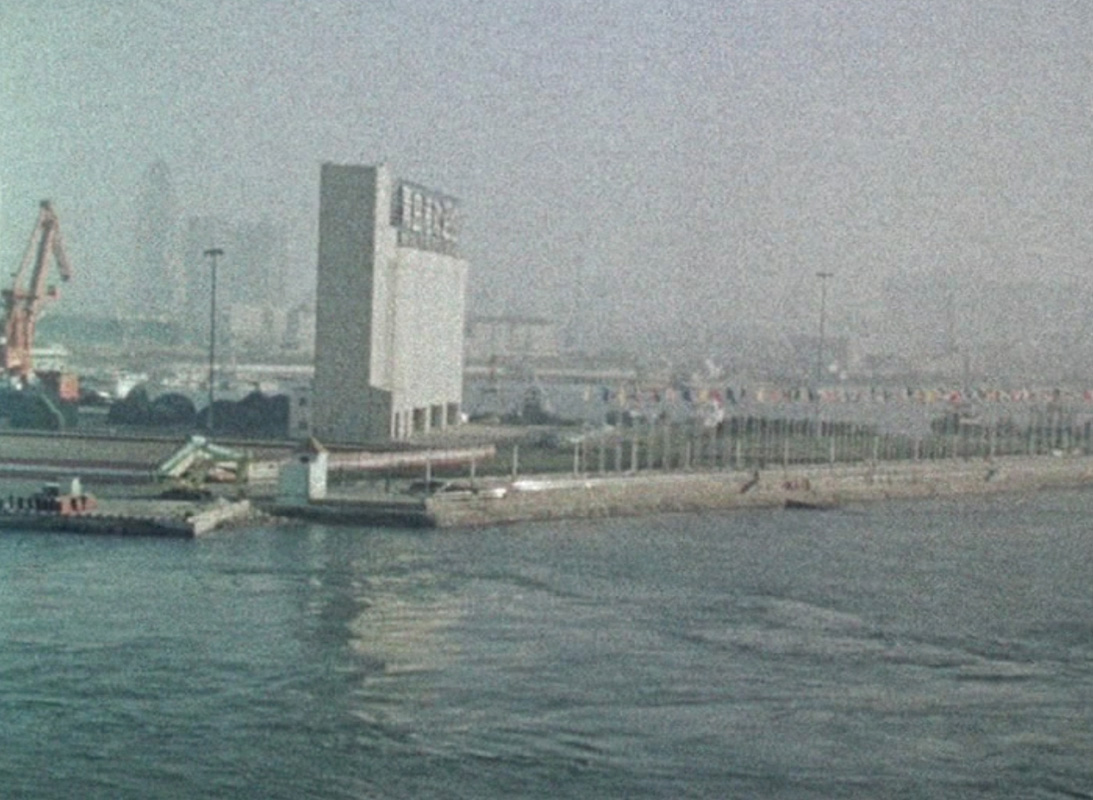
De film werd op 16mm gedraaid in en door de straten van kleine dorpen en beboste bergen, langs kleine handels- en drukke scheepsvaartroutes in China en Zuid-Korea. Marhöfer kijkt naar de scheiding tussen het traditionele en het moderne en exploreert de grenzen tussen mensen, dieren en dingen.
"The film No, I am not a toad, I am a turtle! is neither ethnographic, nor a narrative documentary, nor an essay film. However, it certainly is a film about foreignness, about ontological difference, and narrative power operating in a different syntax. It’s a film shot in Korea, which occupies a specific place in the 'Far East', trapped, as it were, between the Empires of China and Japan. The film comprises a few main topics: A pansori performance - a genre of music and oral narration -, a tiger, an aswang (ghost) story, an ironmonger and the landscape. There is no syntax imposed on the foreignness, no ontological laughter on behalf of the filmmaker but in each of the scenes there is an immanence, especially insofar as they are not subjected to narrative translation or commentary, thereby retaining their sense of mystery. Here 'Korea' is not an outside, but rather a 'trope' - a place, which is simultaneously real and imaginary. It is turned into a cinematic trope, without an anchor or vanishing point. It is a trope born out of what figures most prominently in the scenes: tales of transformation and metamorphosis. However, this is not a metamorphosis in the context of the fantastical or monstrous, or a transformative becoming for its own sake. The point is that each becoming has its own outside - that is, an external logic, a force that doesn’t derive from what is seen, said or else identified, but from the door that is left open, through which different temporalities and beings can enter the stage of actualization. [...] Perhaps what we are accustomed to call 'ghosts' or 'spirits' is in fact a faculty of images; images that inhabit the world and to some of which we are hosts. They transform us as much as we transform them. I think Elke Marhöfer's film is giving a different answer to [Chris] Marker's question regarding the communion with 'things' by means of cinematic images. Images though are not necessarily identical with what can be seen. On the contrary, the image is a semi-autonomous mimetic capacity, a power to lure and transform, a penetrative node, a being. In this sense images can never be entirely positivized and objectified." (Anselm Franke)