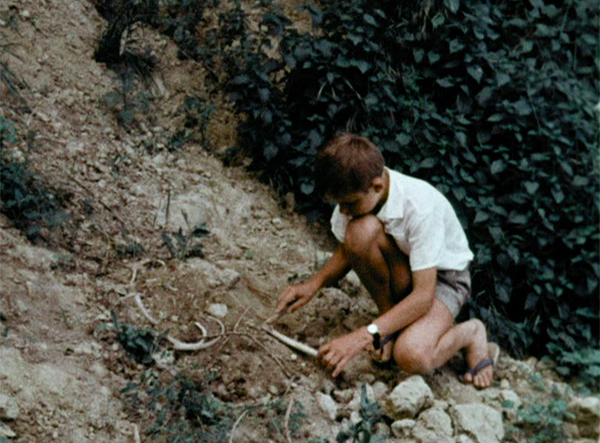
Peter and Zsóka Nestler’s films are history lessons relating the past to the present, the old to the new. At the beginning of this film, we listen to a traditional Hungarian song about the history of the Danube (“...the wind blows from the Danube...”), set against images of a potter’s hands shaping a vase on a wheel. We hear a young boy in a classroom describing in detail the facts related to the Battle of Mohács, in 1526. The film was shot in the summer of 1969, in beautiful colour, and documents a series of journeys up the river on a steamboat. Many-layered narratives unearthed from the ancient and recent past blend with the slow progression of the riverboat, the moving landscape and images of people at work. The film addresses the cultural, social and political history of the river by bringing together scattered histories, from remains found on the riverbanks to the history of shipbuilding and commerce between the two world wars, the peasants’ revolt in the 17th century and the horror of the Holocaust (through a poem by Miklós Radnóti read by Zsóka Nestler). The archaeological dimension of the work by these filmmakers is summarized by one of the first images in this film, in which a boy is playing with a small heap of bones he digs from the soil, and which prompted the filmmaker Hartmut Bitomsky to describe the main gesture of Peter Nestler’s films as one of “finding, showing, and holding”.