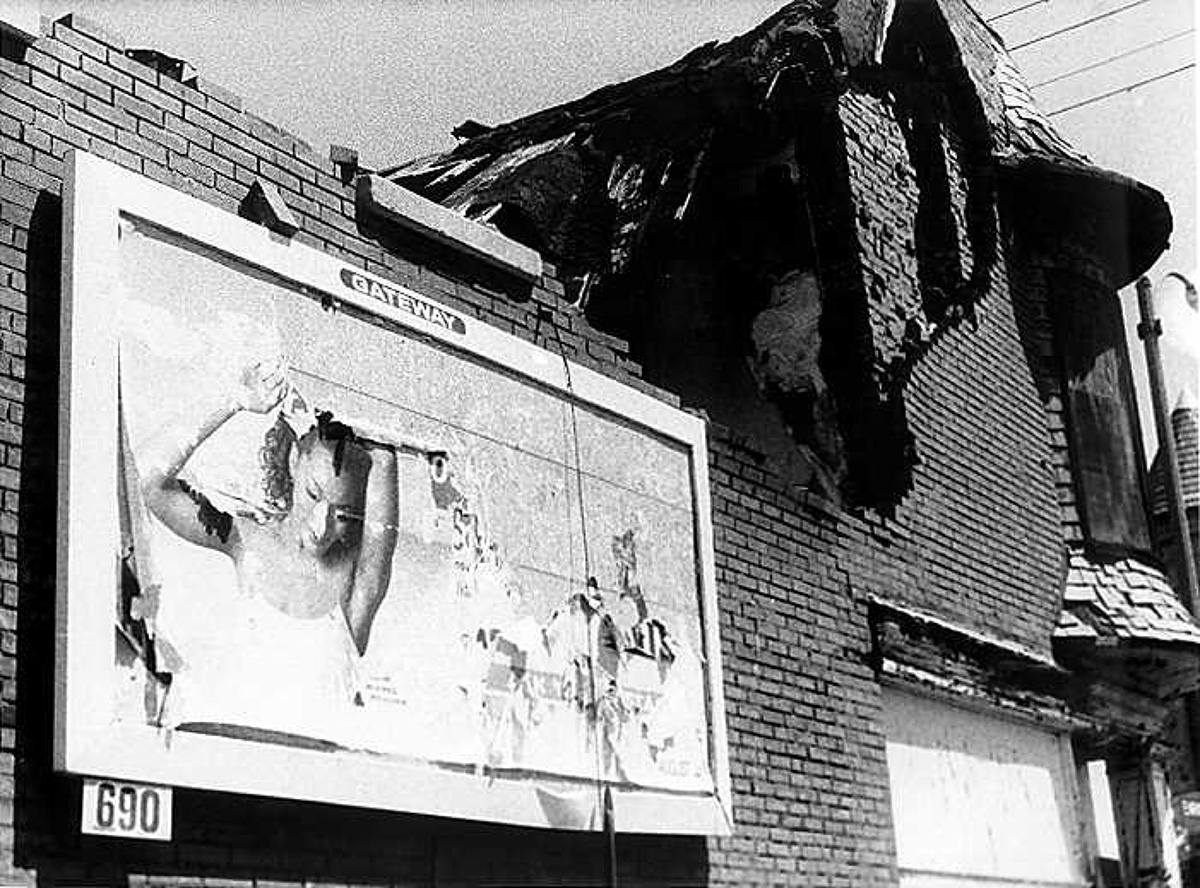
still/here is a meditation on the vast landscape of ruins and vacant lots that constitute the north side of St. Louis, an area populated almost exclusively by working class and working poor African Americans. On a basic level, the film constructs a documentary record of the blight and decay of that part of the city. still/here is, for the most part, not an overt assessment of social injustices, but the politics of class and race within American society are integral to the film. In still/here, the ruins are emblematic of an unimaginable absence at the core of much of the African Diaspora’s experience in North America. From the countless Africans lost in the Middle Passage to the lost future generation of unborn descendants of those that perished during the voyage, to the loss of family and loved ones that were sold away during slavery, absence has been and continues to be a fundamental feature of the African-American experience. But how, in an image-based medium such as film, does one represent absence? “With still/here, I attempt to engage this question by developing a vocabulary of absence. To that end, the film acknowledges the limits of representation and proceeds through a series of visual and aural breakdowns, erasures, contradictions and gaps. It does not use the documentary power of film to recuperate a sense of closure but instead dwells within the space of rupture occasioned by the presence of a profound absence.” Fixing our gaze on derelict cinemas, fading billboards and crumbling facades, we are rarely shown a human being — but their presences haunt the dirgelike soundtrack, abound with unanswered phones, eerie footsteps, closing doors, chat show phone-ins and dripping taps.
“still/here’s urban scene is deserted, and it is filled with the aural remnants of the African American community that might have once inhabited the now abandoned houses and made the barren street feel like a neighborhood. still/here is hybrid and contradictory: ethnography without people; a personal essay without a human face; a documentary without neither a setting nor a clear thesis. Harris’s film shows a specific place turned into a nameless, almost borderless space and then monumentalized as a metaphor. Harris’s images invite the audience to reimagine the abandoned lots, absented houses and discarded equipment as not ruined but ruins.” (Terri Francis)
2K digital restoration by the Academy Film Archive